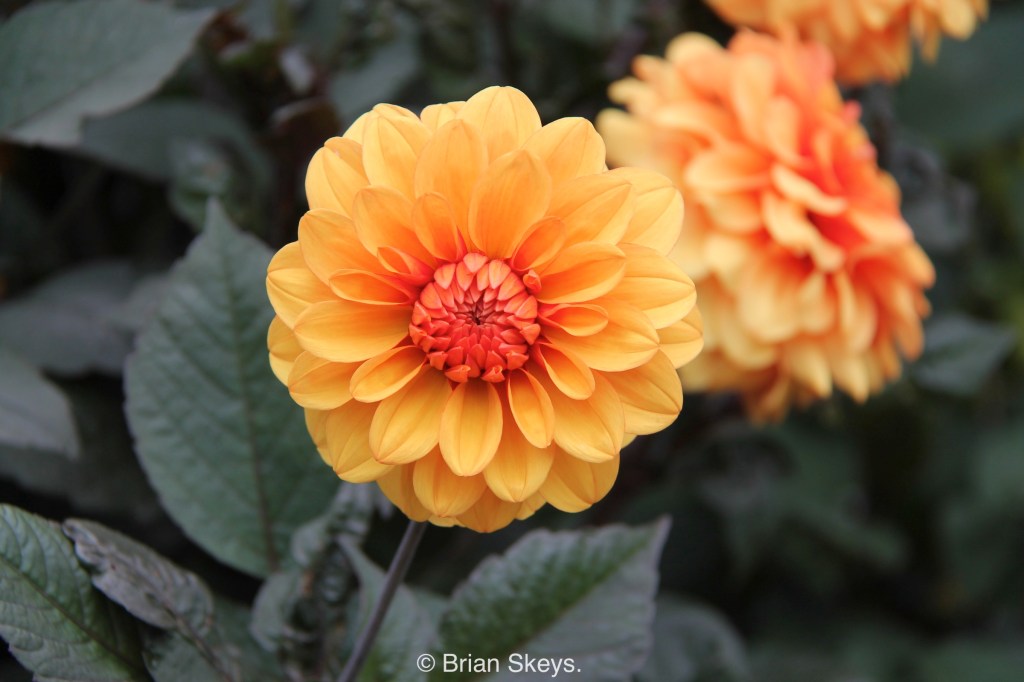
Dahlia. Fact Sheet and how I grow dahlias in Our Garden.
From the beginning, I have grown dahlias here in Our Garden, partly due to nostalgia, partly inspiration from visiting Great Dixter and reading Christopher Lloyd’s books.
Propagation.
Dahlias can be grown from own saved seed, although they don’t always come true to type. The one in the picture below, I grew from seed, it is Dahlia coccinea var Palmeri. The original seed came from The Garden House Devon. It will grow up to 6ft tall, flower and produce tubers in its first year.
Cuttings can be taken in the spring when growth starts. Ideally, you need to cut a small amount of tuber with each shoot, pot up and keep in a propagator or put a poly-bag over the pot. You may need to spray mist in the first few days.
When there are signs of growth, pot on to individual pots when needed.
Remove central stem from cuttings to produce more side shoots.
If you have a big tuber you can divide it. Wait until you can see new growth and then cut into sections with at least one shoot. Dress any cuts with yellow sulphur dust and then pot up.
Lifting and storing Dahlias.
Lift after frost has blackened tops, cut off tops, shake most of the soil off and place in a frost-free environment upside down to dry. Dust tubers with yellow sulphur powder, especially on any damaged tubers, before putting in boxes or pots of compost right way up, with the stems just showing.
I store mine in pots containing a mix of compost and vermiculite (approx 10:1). Then they will not require repotting in the spring.
A cheap form of insulation is polystyrene tiles placed under and around the pots.
In very cold weather you can also throw over horticultural fleece but don’t use bubble wrap over the top as this does not allow any air in and the tubers could rot. Bubble wrap is ideal for lining greenhouses to provide extra insulation in winter. Check during the winter and if the compost becomes too dry, give a light watering on a frost-free day. Also, remove the fleece to allow fresh air to circulate or mould can develop.
Around mid-March start to apply some water to encourage growth.
In April a small amount of grow-more fertiliser or chicken pellets can be added to give a good start before moving them outside on sunny days to harden off before planting out in late May – June.
If you have free-draining soil and wish to leave them in the ground overwinter, cut back after the first frost and provide an insulating mulch of compost or bark. You will need to add some slug protection early in the spring.
Pest and Diseases.
Virus – yellowing of the plant. (Destroy plant don’t compost.)
Earwigs – only a problem if growing for show. My Grandfather use to put inverted flowerpots stuffed with newspaper on canes by each Dahlia, he would then shake the earwigs out in bucket and feed to the chickens! If you want to use as cut flowers, cut the Dahlia flower, hold upside down and shake vigorously to dislodge insects before taking inside the house.
Slugs – use any method that you find works. I use organic slug pellets and nematodes in the garden.
Feed.
Dahlias are heavy feeders; good garden compost or old farmyard manure can be incorporated into the planting hole along with a high potash fertiliser such as Vitax Q4, a Rose fertiliser or for organic gardeners Blood, Fish and Bone. A second application will be needed later in the growing season to keep them flowering. If grown in pots use a slow-release fertiliser and some water retaining gel.
Except for dwarf varieties, Dahlias will need staking, a good method, for individual plants, is to tie a piece of string to a stake and then loop the string around each of the main stems and tie back to the stake. For mass planting, I create a web-like structure with posts and wire over the area. You can also use plastic bean netting stretched over the plants, then secured to posts.
Deadhead during the flowering period and you will have a good display all summer.
I use dahlias in a rotation, mass planted in the raised beds edging the patio, following on in the space, occupied by Tulips, Wallflowers and Forget-me-Nots. I lift and store the Tulips in the greenhouse during the summer when the Dahlias are ready to go into the garden and re-plant the bulbs worth keeping, along with any new ones, in November after lifting the Dahlias. Accompanying the dahlias are other tender annuals, these can vary each year. Tagetes patula is a favourite, the original seed I purchased from Great Dixter. It is their strain selected for height, and will grow to between 3 to 4ft along with Cosmos, Cannas and Hedychuim (Ginger lilies.)
I also plant Dahlias throughout the other beds as a statement plant, they provide wonderful colour right up to the first frost.
My favourite Dahlia is David Howard. Brian Skeys.
 Black Pear Gardening Club.